
Tricot
Tricot fabrics
Tricot
Tricot fabrics
Closed lap warp knit for ready made garments. Smooth, stable and soft against the skin.
Linings · intimates · sportswear
Warp knit fabrics · Tongi, Gazipur · Bangladesh
Mesh, tricot, tulle and netting in nylon and polyester. Knitted, dyed and finished under one roof for activewear, home and technical textiles.
Touch or move across the fabric. It ripples like real mesh.
Artex Mills
We knit synthetic fabric for the world’s brands, loop by loop, from yarn spun in our own group to rolls tested in our own lab.
Products
Tricot, mesh and dazzle fabrics for ready made garments, tulle and printed mesh for fashion and technical use, and nets for homes and the sea. Scroll to deal the swatches, then flip any card for details.
Closed lap warp knit for ready made garments. Smooth, stable and soft against the skin.
Linings · intimates · sportswear
Open mesh in a family of cell sizes, from fine to bold, for breathable panels.
Activewear · linings · bags · footwear
A bright, smooth warp knit with a signature sheen from super bright filament.
Team sportswear · jerseys · shorts
Fine hexagonal net in polyester and nylon. Light, sheer and stable.
Fashion · bridal · decoration
Mesh printed after dyeing, from woodland patterns to fashion prints.
Tactical · outdoor · fashion
Nets for homes across Bangladesh and neighbouring markets including Nepal, Myanmar and India.
Home · health · regional supply
Made for the marine and seafood industry to international regulatory standards that protect marine life.
Marine · seafood
Fabric lab
Pick a construction, fibre, yarn weight and shade. Spin the drape to see how it hangs and catches light, or switch to the pick glass to inspect every loop the way a fabric technologist does.
Process
Every stage on one site, with polyester yarn from a sister plant. Follow the thread.
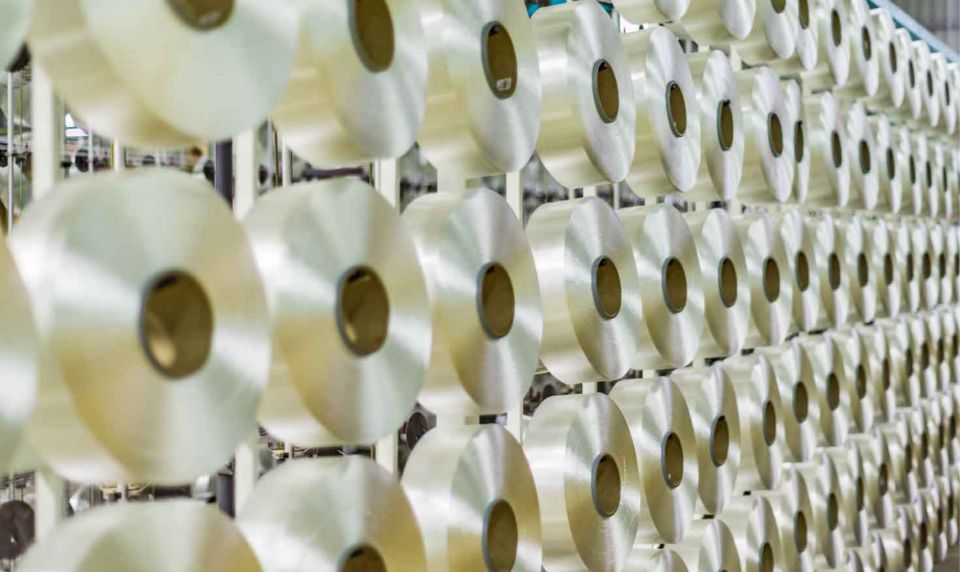
Polyester fully drawn yarn (FDY) comes from Nice Synthetic Yarn Mills, our sister plant in Mawna, Sreepur, spun in fine to heavy counts.
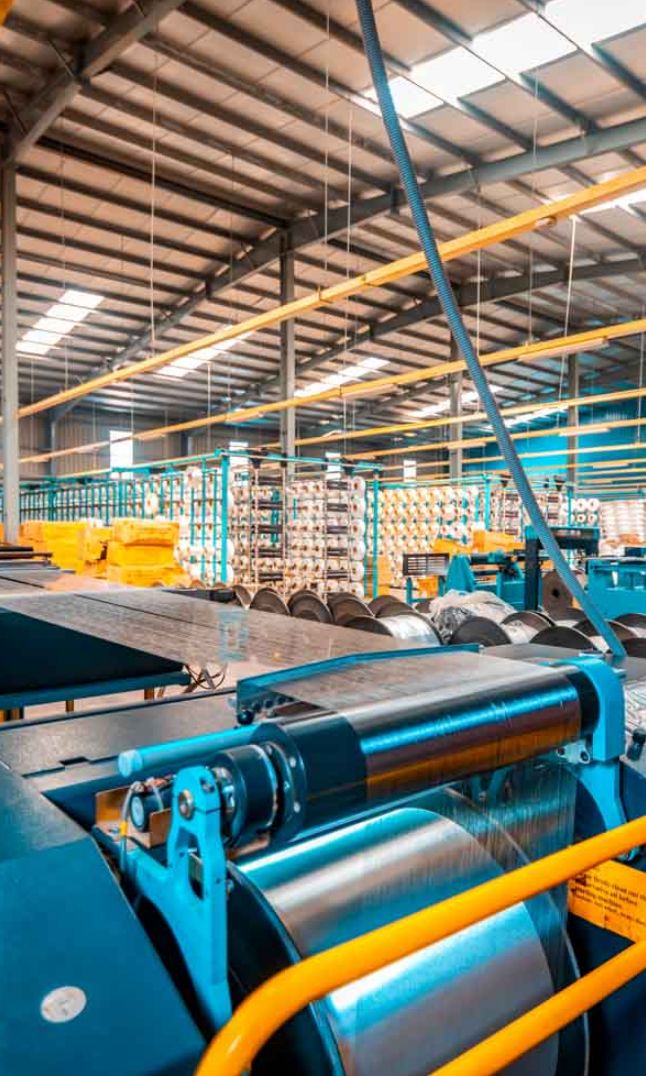
Yarn ends are wound side by side onto warp beams under controlled tension, so every needle on the knitting machine is fed exactly the same way.
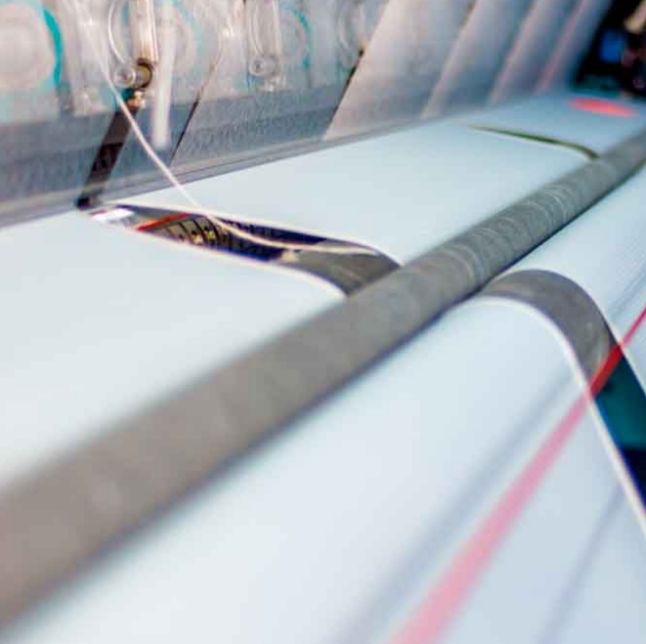
Each needle forms a loop from its own yarn while guide bars swing the yarns between needles. Karl Mayer tricot machines run alongside multi bar machines for more complex structures.
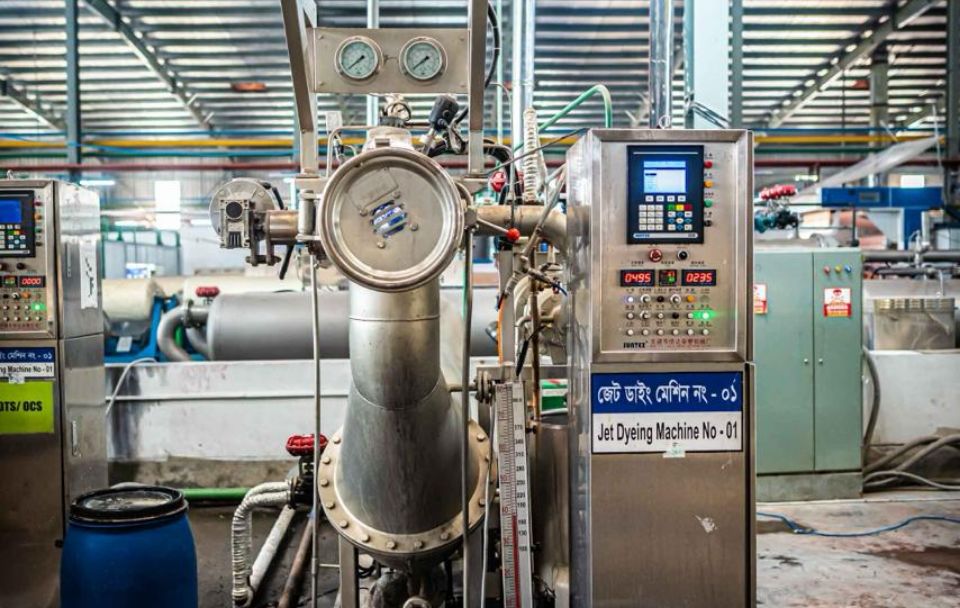
Fabric is dyed on IL Sung jet machines. Dedicated sample machines run lab dips so every shade is approved before bulk production starts.
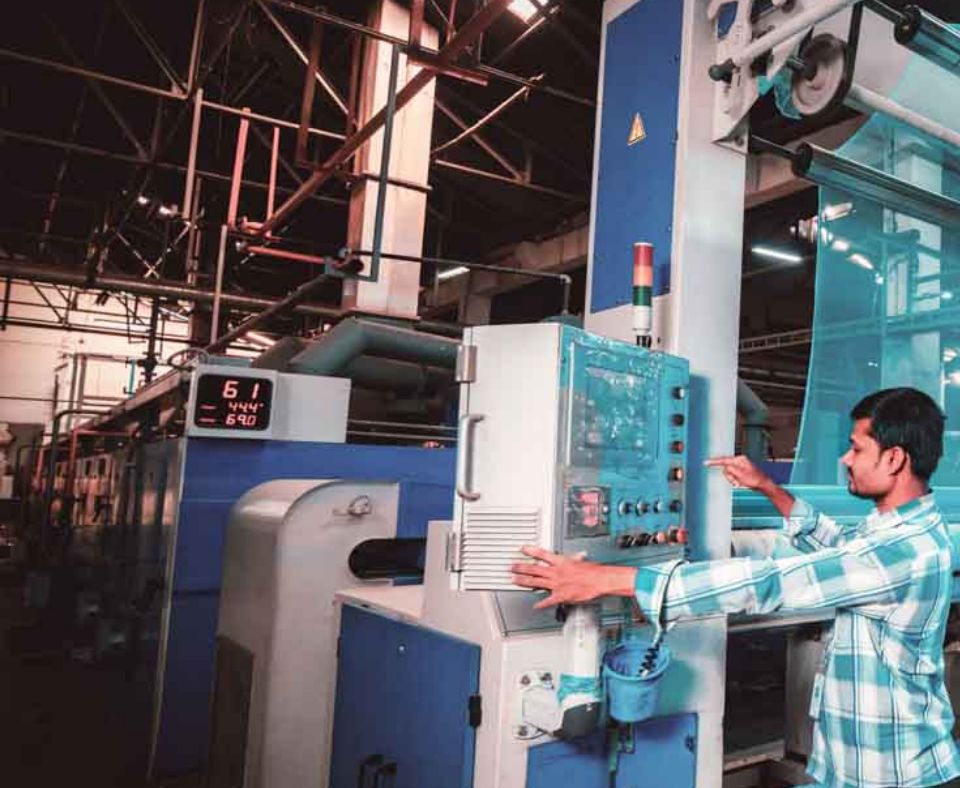
Heat setting and finishing lock in width, hand feel and dimensional stability, ready for printing or inspection.
Lots are tested in house against a control plan, using statistical process control, failure mode analysis and critical to quality checks, then packed for export.
Quality and product safety
Artex works within Talha Group’s product safety system, which follows every product from the first material decision to unannounced audits in bulk.
Quality starts before production. We test in house, calibrate every inspector and technician on a regular cycle, and remove deviation at its source instead of sorting it out at the end.
Testing screens for restricted substances such as APEO, formaldehyde, organotins and PAH, and every chemical follows REACH.
Fibres and yarns come from verified, certified sources, including recycled options, chosen for safety before anything else.
A product failure mode and effect analysis (PFMEA) finds what could go wrong before any new development starts.
Every batch runs to a defined scheme of chemical concentration, temperature and time, reviewed with our chemical suppliers.
A small production batch is inspected, audited and tested before bulk production begins.
People from outside the product team review each development and give feedback from a customer’s point of view.
Batches are tested in the group’s internationally accredited laboratory before they move to the next step.
Products picked at random from production are tested by external laboratories to confirm our results.
Random audits cover inspection, testing, traceability and home testing.
Every product can be traced back to its fibre, its process and its chemicals.
Sustainability
Sustainability is less a word than a commitment. Together with Talha Group, we invest in cleaner energy, careful water use, safer chemistry and open accountability.
Protecting the climate takes nations, industries and suppliers working together. Our part starts inside our own facilities.
Water is one of the most used resources in textiles, so we work to eliminate waste at every step.
Textiles have long relied on chemicals. We choose, manage and screen them through international frameworks.
Transparency and accountability go hand in hand. We share clear, accurate information about our policies, practices and products.
Artex works to international social, environmental and product safety standards. Current certificates are available to buyers on request.
Reach
Our fabrics ship to brands and retailers across Europe and North America, and our mosquito nets serve Bangladesh and neighbouring markets including Nepal, Myanmar and India.
Drag the globe to turn it. Select a market to fly to its route.
People and culture
We train, mentor and protect the people who made us what we are today, and we build a workplace where everyone is respected and valued for their differences.
Decisions are made on merit, and training and development are open to everyone.
Curiosity sparks our impact for clients. We look for people who want to understand what a buyer needs and how to meet it.
Leadership here is not tied to hierarchy. Ideas are judged on merit, not tenure, and open discussion is encouraged.
Curiosity and leadership end in impact. We want people who can show results and move the business forward.
Our culture is known for quick growth, a nurturing spirit and real job satisfaction. Talent from every discipline thrives.
Heritage
Every business starts small, but the dream it carries should be big. Artex is where that dream began.
Artex was the founding venture of Noman Group, its first step toward becoming Bangladesh’s leading vertically integrated textile group.
Under its founder, Noman Group grew into spinning, weaving, dyeing, printing and garment manufacturing, known for quality and reliability.
Founded by Abdullah Mohammad Talha as an alliance of Noman Group, Talha Group runs its businesses independently and invests across industries.
With polyester filament spun by Nice Synthetic Yarn Mills inside the group, Artex controls quality from yarn to finished roll. Textured, dope dyed and recycled yarns are planned next.
Group companies have received the President’s Industrial Development Award and National Export Trophies, and our Managing Director received the IEOM Society Distinguished Industry Leaders Award.
“A vision to drive a revolution.”
With a vision for change and experience built over decades, Talha Group aims to make a bold statement among local conglomerates and international competitors alike. We are integrating technology with nature to move toward a safe and sustainable tomorrow.
Group
Talha Group is a vertically integrated textile conglomerate working across the full value chain, from spinning and weaving to dyeing, finishing and garments, with businesses in chemicals, packaging, printing, brands, media and defence.
Bed, bath and homewear with trims and accessories, from spinning to finishing.
Nice Synthetic Yarn Mills and Artex Mills, from polyester filament to finished fabric and nets.
The group’s chemistry business.
Corrugated, cardboard and offset packaging solutions.
Pre press, press and post press for labels, magazines, notebooks and calendars.
Lifestyle brands and a marketplace for fashion and homeware.
A premium lifestyle magazine in print and online.
A division partnering with defence, maritime and security organisations to build national capability.
Drag or swipe to turn the ring.
Founder of Noman Group, one of the largest vertically integrated textile groups in Bangladesh.
Founder of Talha Group and recipient of the IEOM Society Distinguished Industry Leaders Award.
Insights
Perspectives from Talha Group on sustainability and the direction of the industry.
Why materials, ethical sourcing, lifecycle measurement and better data will decide the industry’s footprint.
Read on talhagroup.com ReportHow environmental goals, social responsibility and transparent governance are reshaping what brands expect.
Read on talhagroup.com NewsThe changes the sector needs to keep its competitive edge as global trade and demand shift.
Read on talhagroup.comContact
Add fabrics from the lab, tell us about your programme, and our team will get back to you promptly.